About the pictures
Our telling
The pictures on Bretha are imagined scenes, made with an AI image tool and chosen by the person who runs the site. They are drawn in the manner of early Irish manuscripts. They are not illustrations from any manuscript.
 The pictures on Bretha are imagined scenes, made with an AI image tool and chosen by the person who runs the site. They are drawn in the manner of early Irish manuscripts. They are not illustrations from any manuscript.
What a picture is
A picture helps you see a scene that the law describes in words: a gathering below a ring-fort, a tree, a ferry. It is our own telling, in the same way as the scene paragraph on each case page.
What a picture is not
It is not evidence. It does not show how a person, a tool, a building or a garment looked in the 7th or 8th century. Details may be wrong, and we do not claim otherwise. The law, the readings and the sources are on the case page in words, each labelled, and the picture adds nothing to them.
The small drawings
Each case has a small drawing of one thing from it. It sits beside the case on its own page and in the lists. These are imagined too, and made the same way. Here they are together, in the order of the book, each with the rule or the moment it stands for. The rule is set out in full, with its source, on the page of the case.
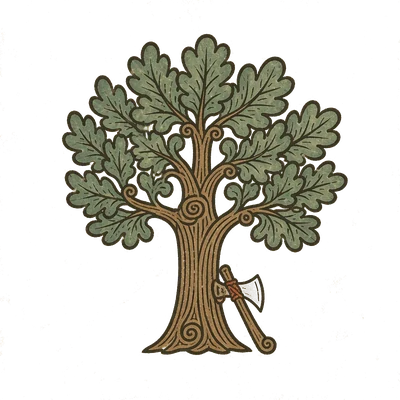
The oak and the axe, from The Felled Oak. An oak was a noble of the wood. Cutting a neighbour’s through at the base cost a fine of five séts, and a milch cow besides.
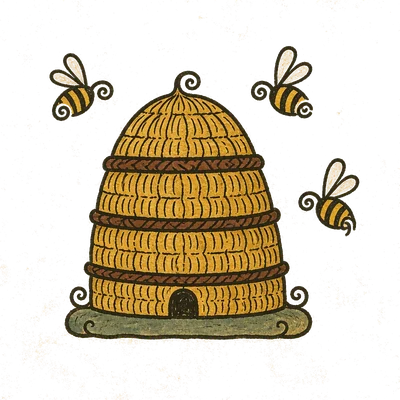
The hive, from The Bee That Blinded a King. No one could say which hive the bee came from. Lots were cast on them all, and the hive the lot fell on was forfeit.
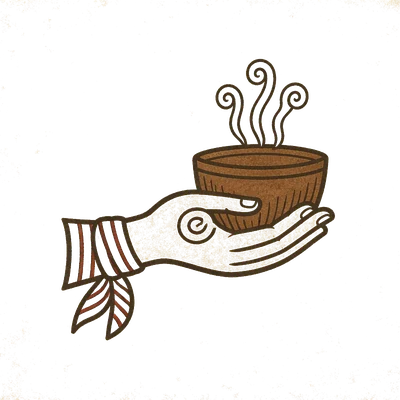
The steaming bowl, from Nine Days’ Care. A man wrongfully hurt, and still in need of nursing after nine days, was nursed at the cost of the man who hurt him.
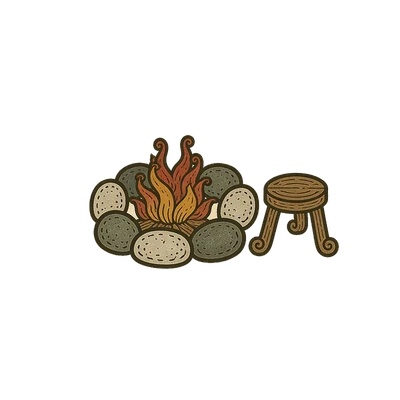
The hearth, from The Body-Fine. The dead man’s kin gather about it in our scene. The fixed body-fine for a killing went to his kin on his father’s side.
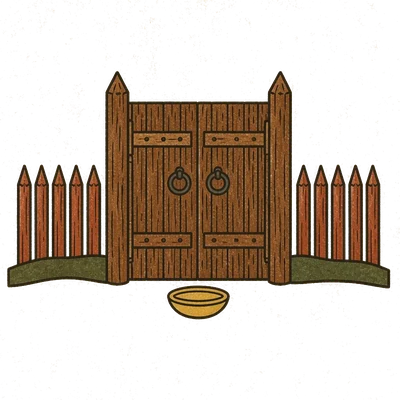
The shut gate and the empty bowl, from Fasting upon a Lord. A claim against a person of high rank began with a fast, probably outside his house. If he ate without giving a pledge or naming a surety, he owed double.
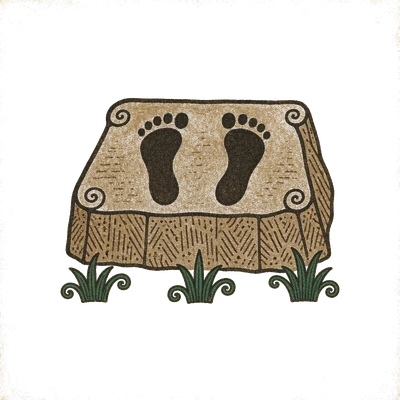
The stone with two footprints, from The Case of Tanistry. Our own emblem for the choosing of a new lord. The report of the case mentions no stone.
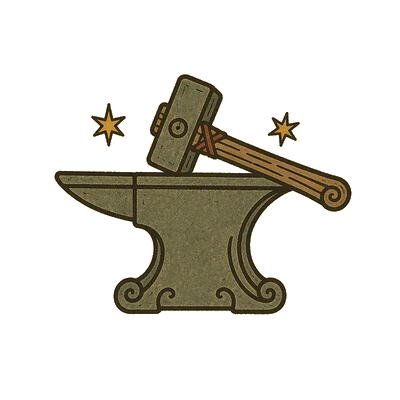
The anvil and the hammer, from The Smith’s Forge. The law of accidents says “the immunity of hammers is an anvil”. Kelly presumes it means that no one pays when a person goes too near a smith at work and is hurt.
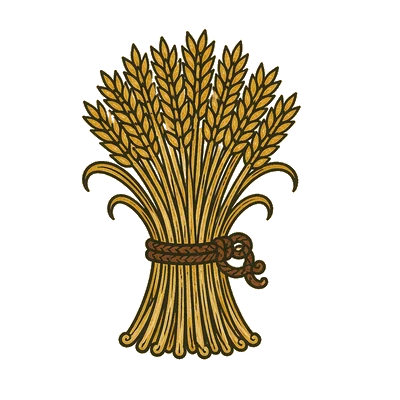
The sheaf of barley, from The Craving. A longed-for morsel of food could be taken without penalty. A glossator says this means the craving of a pregnant woman.
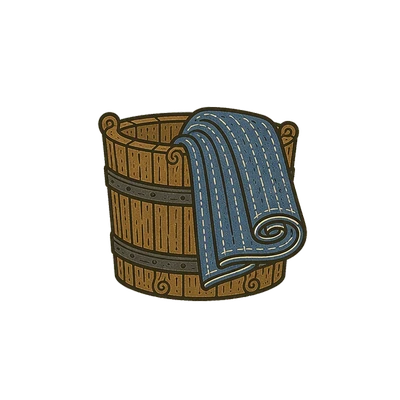
The pail and the shawl, from The Wife’s Grounds. In our scene Neassa winds her shawl over the mark of the blow before she goes to the well. A wife could divorce a husband whose blow left a blemish.
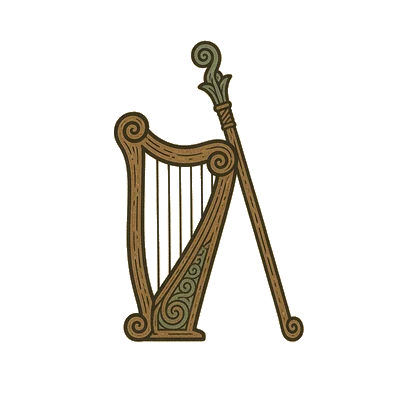
The harp and the staff, from The Poet’s Warning. A poet was not to seize cattle for what he was owed. He was to press his claim through his art.
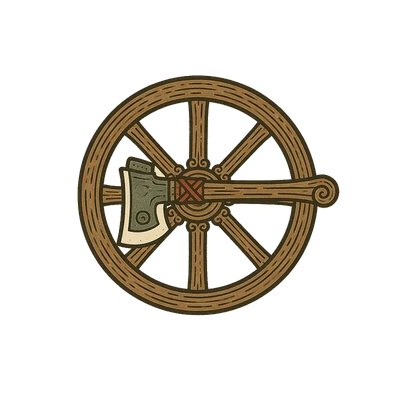
The wheel and the axe, from The King and the Axe. In our scene a cart has lost a wheel and a king takes up the axe. A king at work with an axe had a commoner’s honour-price for as long as he was at it.
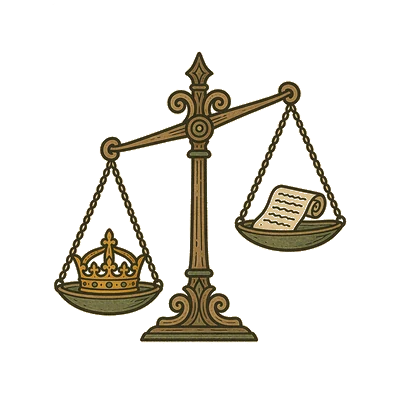
The balance, from The King Who Was Satirised and Praised. A crown in one pan and a poem in the other. A satirised king’s honour might be restored when a praise-poem cancelled the satire.
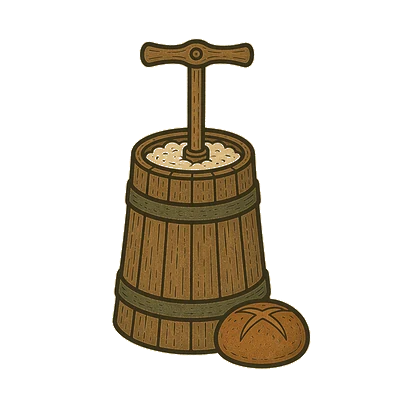
The churn and the loaf, from The Dog on the Neighbour’s Land. The owner of a dog that fouled a neighbour’s land cleared the dirt away and gave the same quantity of butter, curds and dough.
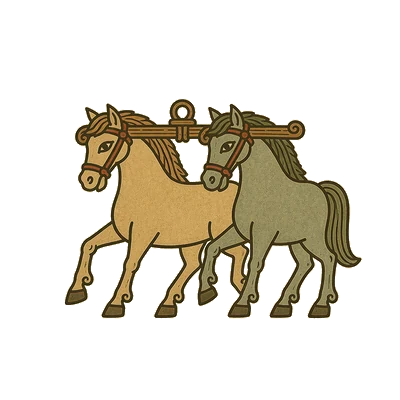
The yoked horses, from The Rooting Pigs. The test of a field that pigs have rooted up. Two yoked horses are let loose in it, and it is fit when no earth sticks to their teeth as they graze.
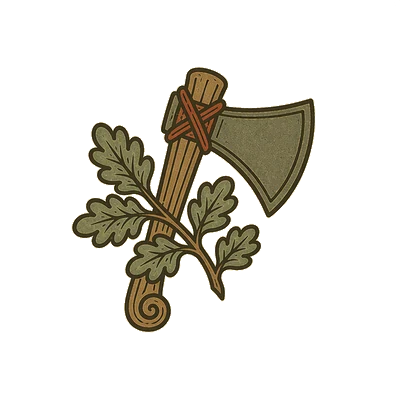
The axe, from The Woodcutter’s Shout. A tree-cutter who gave no shout of warning before the tree fell answered for the death or hurt it caused.
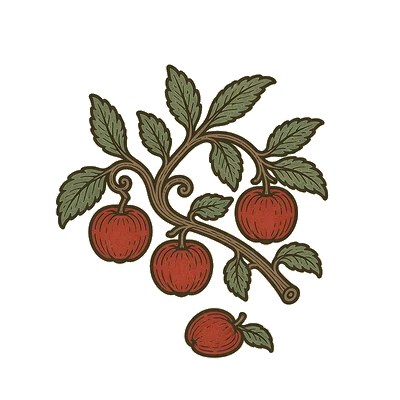
The apple branch, from The Neighbour’s Apples. Fruit that fell on a neighbour’s land was shared equally for three years. In the fourth year it all went to the neighbour.
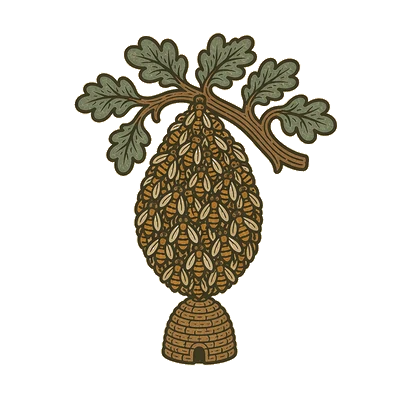
The swarm, from The Swarm in the Green. The finder of a stray swarm in a lawful green had a quarter of its produce for a year. The owner of the green had the rest.
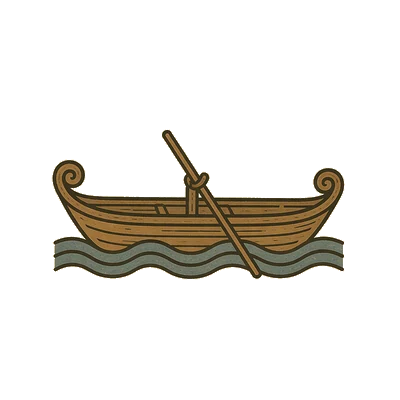
The boat, from The Overloaded Ferry. A passenger took the risk of the crossing on himself. The owner answered only if he set out overloaded or in stormy weather.
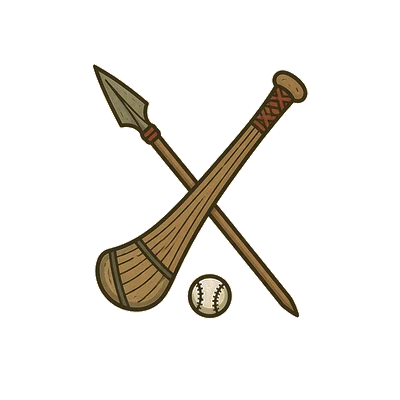
The hurley and the spear, from The Boys’ Games. A boy hurt at hurling had no claim. For a boy hurt at a game of spears, the thrower’s kin apparently had to provide the nursing.
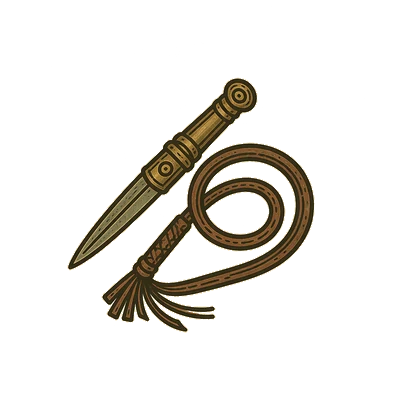
The lancet and the whip, from Distraint on the Physician. To press a physician who would not pay, the plaintiff carried off his lancet and, as the text now reads, his horse-whip.
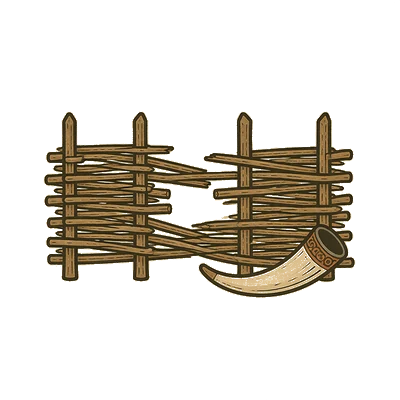
The broken fence, from The Gap in the Fence. A farmer whose own fence was not good enough could not claim for the damage a neighbour’s animals did.
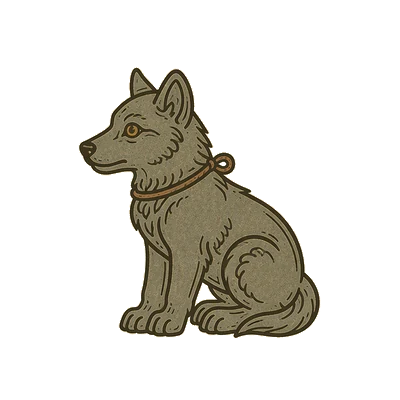
The wolf on a cord, from The Pet Wolf. The law lists a pet wolf among the animals whose trespass cost their owner his fore-pledge. A later commentator sets its offences beside a dog’s.
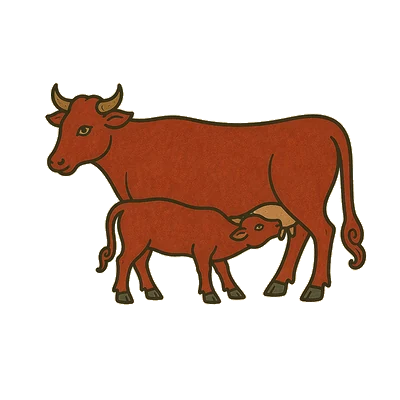
The cow and her calf, from The Cow That Had Just Calved. A cow that had just calved was on the list of animals that could not be taken for a debt.
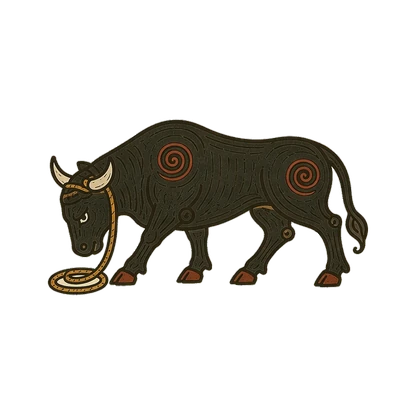
The bull on a rope, from The Surety Beyond His Means. No one could stand surety for more than his honour-price. In our scene the bull costs more than that.
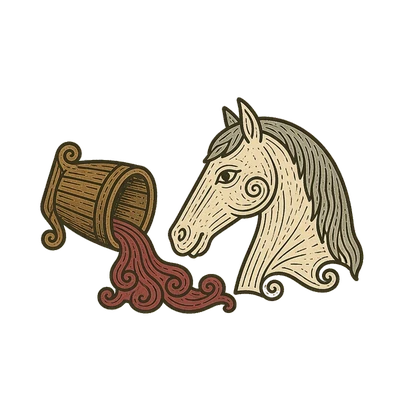
The spilled cup and the mare, from The Bargain Made in Drink. A contract made when either party was drunk was normally invalid. In our scene the thing sold is a grey mare.
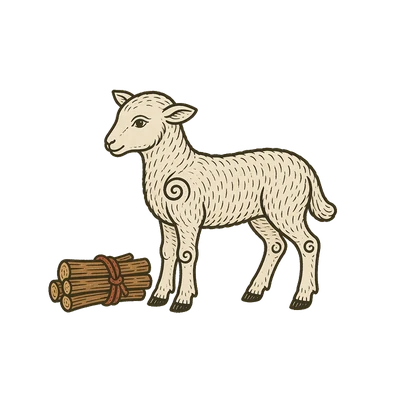
The lamb and the firewood, from The Foster-Son Fetched Home. The glosses and commentary have a small farmer’s son taught to mind lambs and to chop firewood. A father who took his child home before the term was out, “without a legitimate reason”, lost the whole fee.
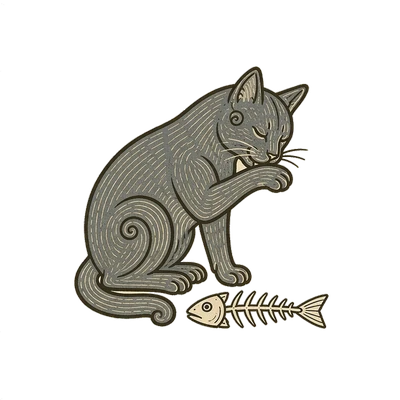
The cat and the fish-bone, from The Cat in the Kitchen. Bretha Étgid says “the kitchen is an immunity for cats”. By its commentary, a cat’s owner owed nothing when the cat ate food left lying in the kitchen with no one minding it.
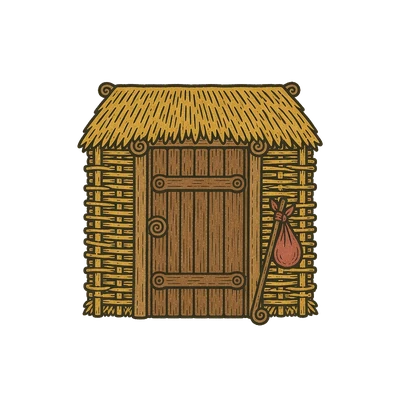
The shut door, from The Guest Turned Away. To refuse food and shelter where they were due was an offence called esáin, “driving away”. Kelly’s note gives what was owed: the full honour-price of the person turned away.
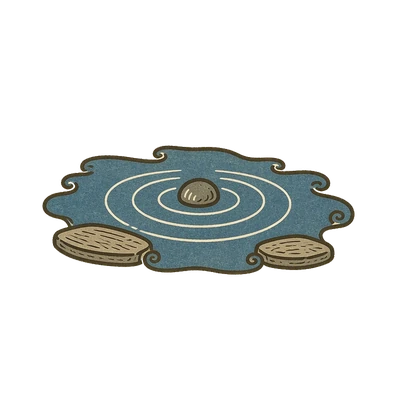
The stone and its ripples, from The Stone at the Ford. Nothing was owed, on Kelly’s account, when a drúth threw something and it hurt a person. The word appears to mean a person with an intellectual disability. It was for the passer-by to stay out of range.
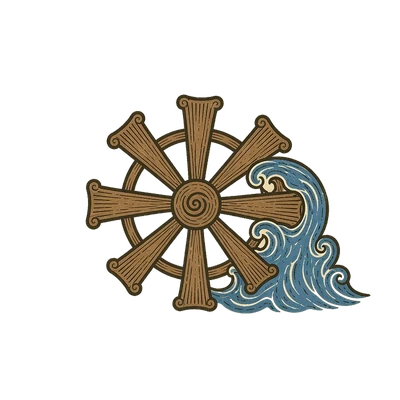
The mill-wheel, from The Mill-Race. Kelly says a man building a mill, with no other route for the race, could insist on digging it through a neighbour’s land if he paid a fee. For arable land the fee was a sét worth ten scruples.
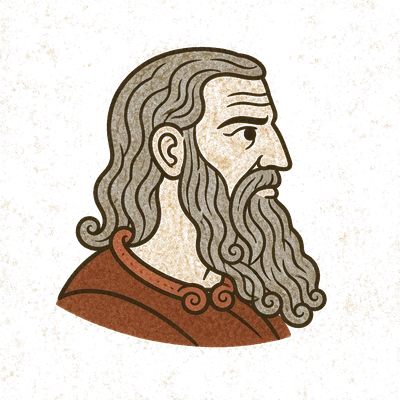
Morann, from Morann’s collar. The judge of legend. One tale gives him a collar that choked the guilty. A later telling has it tighten on anyone who judged unjustly while wearing it.
The decorated letters
The large letters that open the text are new drawings in the manner of the Book of Kells, a gospel book of about the year 800. None is a copy of a letter in it.
Scholars sayThe manuscripts of the law are not like this. Kelly says they were written mainly in the 14th to 16th centuries and are plain, on the whole, beside the early gospel books. Most of their opening letters are modest, and the little colour the scribes used is mostly red or yellow at those letters. He points to a few pages that are exceptions.
If you spot a mistake
Where a picture gets something wrong that matters, we will change it and say so on the corrections page.